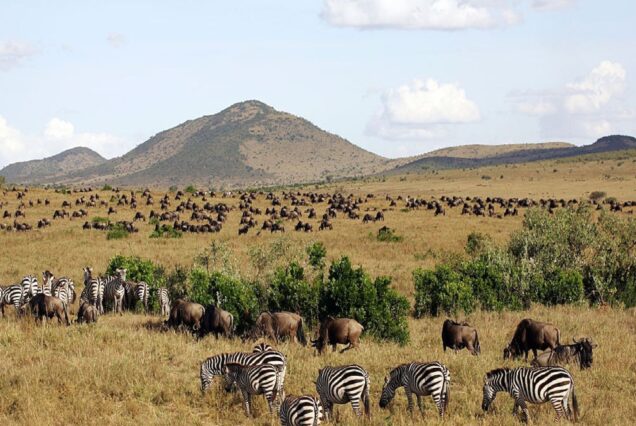
The Great Wildebeest Migration is one of the most spectacular wildlife events in Africa, and it primarily takes place in the Maasai Mara, a game reserve in Kenya. Here are some key details about the wildebeest migration in the Maasai Mara:
Tour Plan
Day 1:
- Timing: The Great Wildebeest Migration is an annual event, and the timing can vary slightly from year to year. It typically occurs from July to October. During this period, millions of wildebeest, along with zebras and other herbivores, move in search of fresh grass and water.
- Migration Route: The migration is a continuous cycle, and it covers a vast area that includes the Serengeti National Park in Tanzania and the Maasai Mara in Kenya. The wildebeest follow a circular route, driven by the availability of food and water.
- River Crossings: One of the most iconic and dramatic aspects of the migration is the river crossings, where wildebeest and zebras attempt to cross rivers such as the Mara River. These crossings are fraught with danger, as they are often accompanied by crocodile attacks and other challenges.
- Predator Activity: The migration is a prime time for predators, especially lions, cheetahs, and hyenas, to hunt. The abundance of prey animals during the migration provides ample opportunities for these predators.
- Hot Air Balloon Safaris: Many tourists opt for hot air balloon safaris to get a bird’s-eye view of the vast herds of wildebeest and other animals as they traverse the Maasai Mara.
- Diverse Wildlife: While the wildebeest are a major highlight, the migration also includes large numbers of zebras, gazelles, and other herbivores, which, in turn, attract a variety of predators.
- Spectacular Photography: The Great Migration offers fantastic opportunities for wildlife photographers to capture the breathtaking scenes of vast herds, river crossings, and predator-prey interactions.
- Accommodation Options: There are numerous lodges, camps, and accommodations within the Maasai Mara that cater to tourists who want to witness the migration. Booking in advance is essential during the peak migration season.
- Conservation and Education: Many safari operators and lodges provide information and educational programs about the migration, the ecosystem, and the importance of conservation efforts.
- Responsible Tourism: It’s essential to choose reputable safari operators that follow responsible tourism practices to minimize the impact of human activity on the environment and wildlife.
Tour Map
Reviews
There are no reviews yet.
From
$0.00
Enquiry Form